
LEAD THROUGH COMPLEXITY
Leadership Support Programme for Western Balkans civil society
A leadership programme for complex realities
Leading in civil society today often means working in motion.
There is always something urgent.
Decisions cannot wait.
Self-confidence gets tested.
Responsibilities accumulate.
Relationships carry pressure.
And the space to step back is limited.
Yet this is exactly where many important leadership questions sit:
- How do I stay grounded and take care of myself under constant pressure?
- How do I work with my team when expectations are high and capacity is stretched?
- How do I build trust and navigate tension, difference, and difficult conversations?
- How do I make strategic decisions I can stand behind in complex and often polarised contexts?
These questions are rarely addressed in the flow of everyday work, but they shape how leadership is practised and experienced.
This programme was created in response to realities repeatedly identified by civil society leaders across the Western Balkans: the need for more space for reflection, self-awareness, strategic thinking, sustainable leadership practice, and peer exchange.
WHO IS BEHIND THE PROGRAMME
Lead Through Complexity was initiated in 2025 through the cooperation of the Hans Wilsdorf Foundation and PeaceNexus Foundation, building on their respective engagement with civil society partners in nature conservation and peacebuilding across the Western Balkans. The programme was co-created by CPL Engage through a participatory design process, with active participation of the two initiating foundations and informed by conversations with civil society leaders, regional experts, and learning practitioners, in response to recurring leadership realities identified across the region: pressure, complexity, limited space for reflection, and the need for more sustainable, context-relevant leadership practice. The programme is designed and implemented as a leadership learning space focused on participants’ own practice, peer exchange, and organisational realities.
CPL Engage as a newly established non-profit and community-oriented organisation based in Zagreb, Croatia, created as the civic and community-based wing of the Centre for Participatory Leadership, brings together a team of professionals from the Western Balkans and beyond with experience in leadership development, organisational development, team building, facilitation, and civil society development.
CPL Engage, together with its wider team of experts, facilitators, mentors and coaches leads implementation of the programme, supported by the PeaceNexus Foundation and the Hans Wilsdorf Foundation.
ABOUT THE PROGRAMME
The programme brings together civil society leaders from nature conservation and social cohesion and reconciliation across the Western Balkans for a leadership journey rooted in reflection, exchange, practice, and real organisational life.
It creates space to:
- explore real leadership challenges from their own contexts
- reflect on how leadership is practised under pressure
- strengthen how people, teams, and organisational relationships are led
- navigate complexity, conflict, and change more intentionally
- apply new approaches directly in everyday work and organisational reality
The programme invites participants to explore questions such as:
- How can I move from reactive firefighting toward more intentional and strategic leadership?
- How can I reduce isolation and over-responsibility by strengthening trust, delegation, and collaboration?
- How can I lead in a more grounded and sustainable way under stress and pressure?
- How can I steer organizational change more confidently?
This is not a technical or thematic training programme. It is a tailored leadership support programme, where participants are recognised as experienced practitioners and active contributors to the learning journey.
The programme is organised around four interconnected thematic areas. Together, they form the backbone of the learning journey and are addressed through in-person workshops, online sessions, peer exchange, coaching, mentoring, and practical application.
1. Leading self under pressure: resilience and wellbeing
Participants explore how they show up as leaders under pressure, how their values and sense of purpose guide their leadership, and what patterns may stand in the way of the leader they want to be. This theme supports stronger self-awareness, self-regulation, boundary-setting, and more sustainable ways of leading themselves and others.
2. Enabling others to grow: teams, trust, and accountability
Participants work on how they support and lead people, including through delegation, feedback, coaching, communication, and difficult conversations. This theme also focuses on creating psychological safety, understanding power dynamics, strengthening mutual accountability, and enabling others, including newer generations of leaders, to step up and develop their own leadership capacity.
3. Leading strategically in complex and polarised contexts
Participants work on the ability to step back from constant urgency and think more strategically about their role, their organisation’s purpose, and key decisions. This theme supports systems thinking, strategic judgment, navigating complexity and polarisation, and applying conflict sensitivity in real leadership situations.
4. Leading change in practice
Across the programme, participants are supported to translate learning into practice through a concrete change initiative or improvement area linked to their own leadership context. Through the programme, participants may identify a change in behaviour, relationship, team process, organisational system, or personal leadership capacity that they would like to test or strengthen. The emphasis is on feasible, meaningful learning through action, small enough to be realistic, but concrete enough to help participants notice shifts in their leadership practice, relationships, ways of working, or organisational context. For those already engaged in demanding organisational development or partner-supported processes, the initiative can build on existing work rather than create something new.
Together, these thematic areas aim to support participants in becoming more intentional, reflective, and effective leaders: able to care for themselves and others, strengthen teams and relationships, navigate complexity with greater confidence, and apply learning in ways that matter in their everyday organisational reality
HOW THE PROGRAMME WORKS
The programme runs from October 2026 until May 2027 and combines:
- two in-person workshops for deeper reflection, dialogue, and leadership practice
- short online sessions, including a kick-off, group check-in, and thematic elective modules
- individual coaching and mentoring support
- peer exchange and group reflection
- a practice-based change initiative implemented within participants’ own organisations
The programme is intentionally designed for leaders who juggle multiple obligations and includes space during in-person workshops for organisational check-ins and connection with ongoing work realities. The intensity of the mandatory programme components (13 working days altogether) has been designed with the purpose of enabling meaningful conversations and leadership support.
The working language of the programme is English. Participants are expected to be able to participate actively in discussions and reflections in English.
For this cohort invitation to apply is shared primarily through partners and networks connected to the programme’s supporting foundations within the nature protection and social cohesion and reconciliation.
CORE TEAM MANAGING THE PROGRAMME
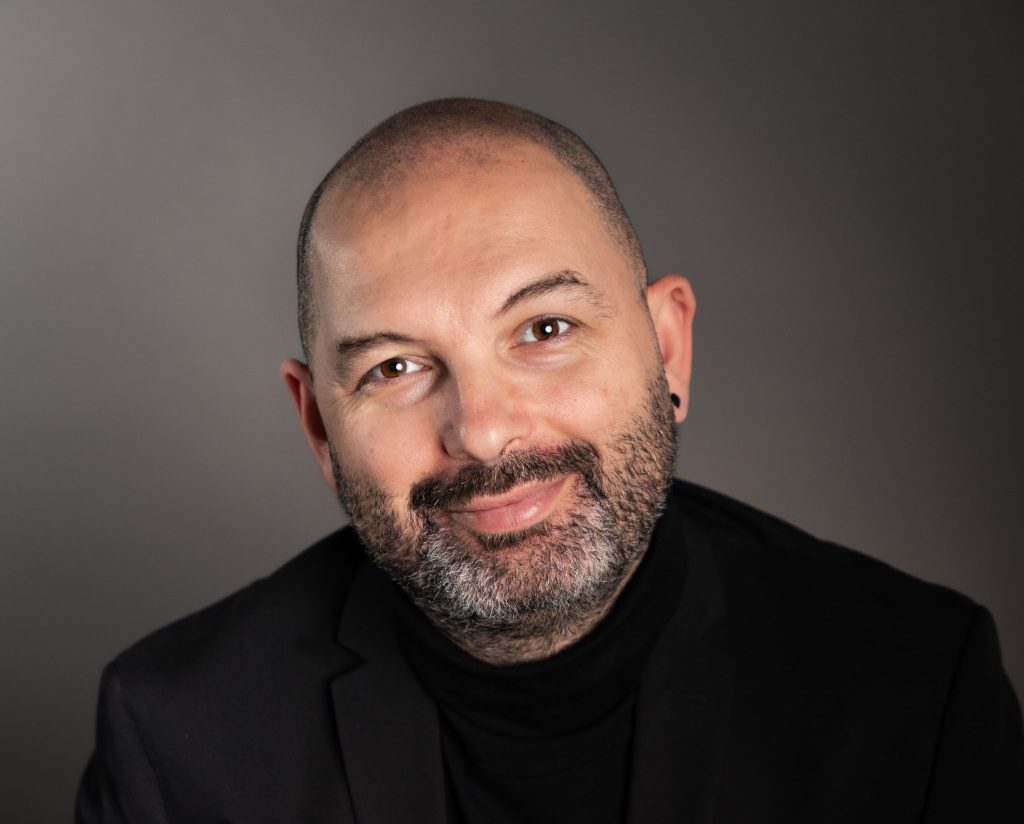
Taulant Hoxha is a civil society and governance professional with two decades of experience in leading and supporting democratic development, civic engagement, and institutional reform. He has worked with civil society organizations, public institutions, and international donors in Kosovo, the Western Balkans, and beyond, combining strategic leadership with hands-on expertise in policy advocacy, program design, grant-making, and organizational development.
He is the former Executive Director of the Kosovar Civil Society Foundation and former Chair of Board of the Balkan Civil Society Development Network. He has contributed to key national, regional, and European frameworks and initiatives on civic space, public participation, and freedom of association. His work is grounded in a strong belief that civil society is most meaningful and sustainable when it is locally led, practiced through inclusive leadership, and rooted in the real needs and voices of communities.
He holds a degree in Political Science and has completed various professional trainings and fellowships in Europe and USA. He is based in Prishtina and currently works internationally as a freelance strategic advisor and consultant.
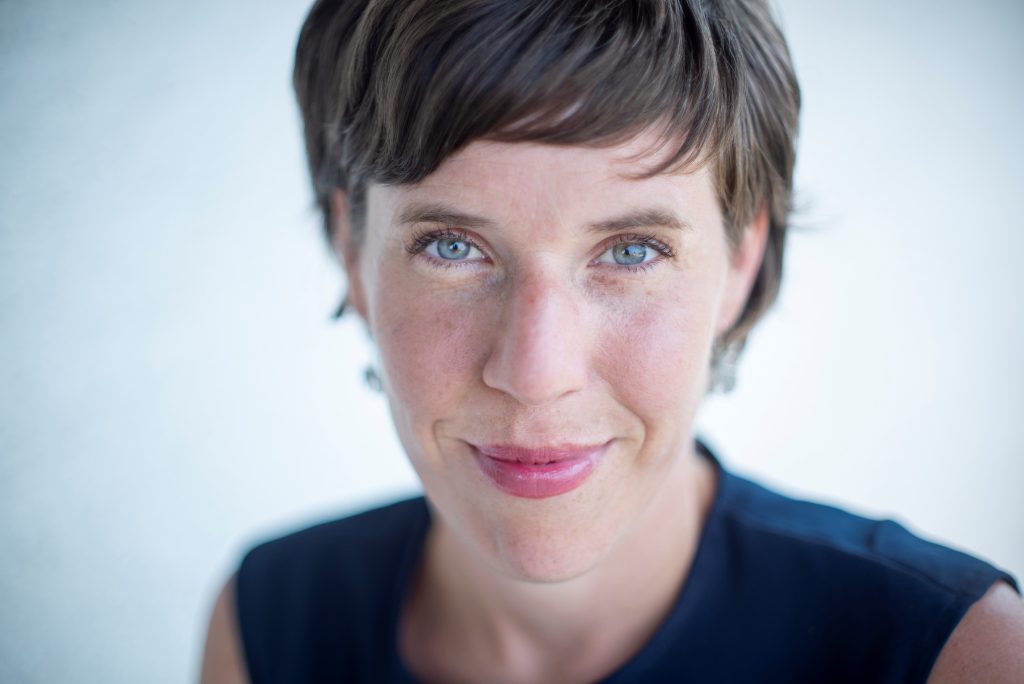
Petra Založnik is a trainer, facilitator, coach, narrative practitioner and evaluator who works with organizations across sectors in the field of complexity, innovation, leadership, organizational development, multiple-stakeholder engagement and quality evaluation.
Petra works internationally with strength-based approaches, which bring positive change in teams, organizations and partnerships. She is especially interested in building leadership competencies and learning ecosystems that help individuals and groups unlock the potential of collaboration and create a sustainable impact. She believes in curiosity, openness, respect for difference, boldness, professionalism and bravery.
Petra lives on the outskirts of Ljubljana, Slovenia. She holds a BSc in Pedagogy and Sociology. She is a certified ICF Story Coach, a member of the Art of Hosting community, and the Voices that Count network. Petra is a founding member of the CPL Engage.
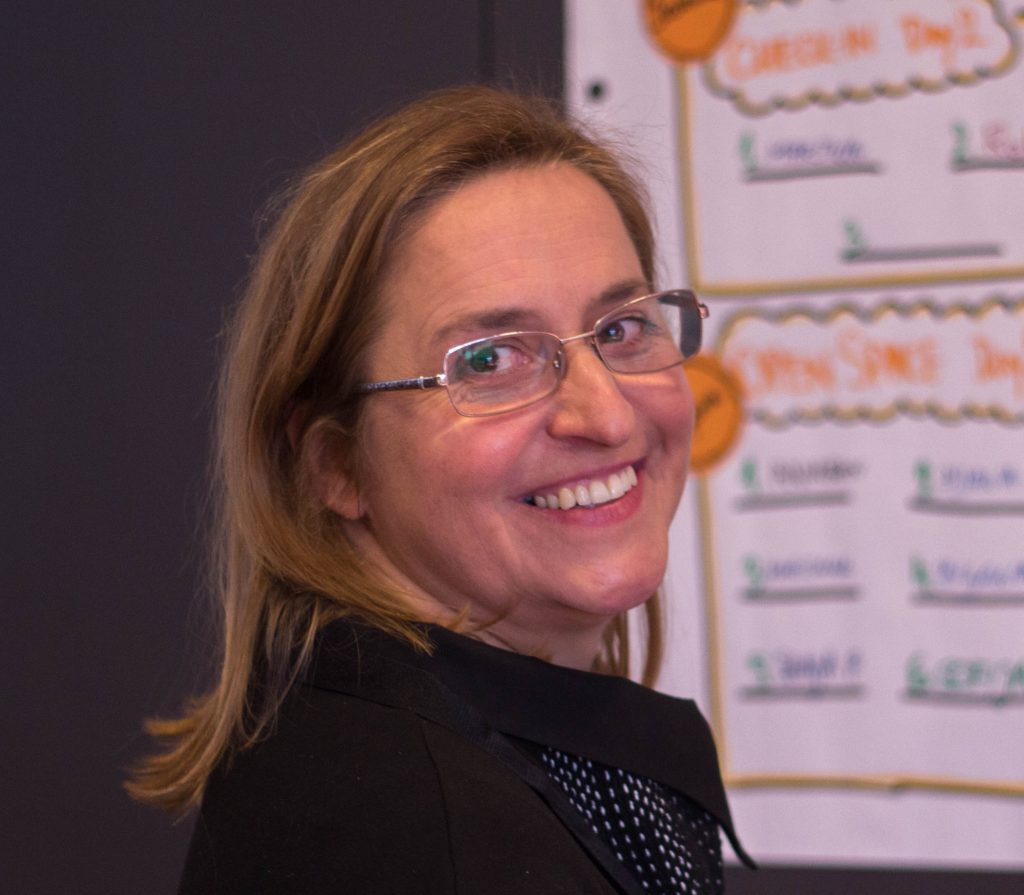
Miljenka Plazonić Bogdan is a professional facilitator, trainer and HR consultant with more than 20 years of experience. She is using participatory group processes as an engine for establishing long-term collaboration and supporting the development of the organisations.
During her extensive corporate experience and professional career working with all sectors, she has designed and led numerous training and development processes focused on leadership skill development, fostering collaboration, enhancing communication quality, teamwork, and employee engagement.
Miljenka holds a degree in Physics from the Faculty of Science in Zagreb and MSc in Organizational Psychology at Birkbeck, University of London. She is an IAF Certified Professional Facilitator and an active member and regional contact for the Art of Hosting network.
Miljenka lives in Zagreb and works in the EMEA region, as the founder of the Centre for Participatory Leadership and as an associate to several international consultancies. Miljenka is a founding member and a president of the CPL Engage.
For any questions about the programme, please contact us by writing to ltc.engage@cplonline.eu