
Self-check: Do you need facilitation skills?
Think about your last few meetings or workshops.
✅ Do all voices get heard — or do the same few people dominate?
✅ Does the group leave with clear agreements — or more confusion?
✅ Can you help people stay focused when discussions go off track?
✅ Do you know how to turn disagreements into productive dialogue?
✅ Do people walk out motivated — or just relieved it’s over?
If you said “hmm…” to any of these — you’re already feeling the need for facilitation.
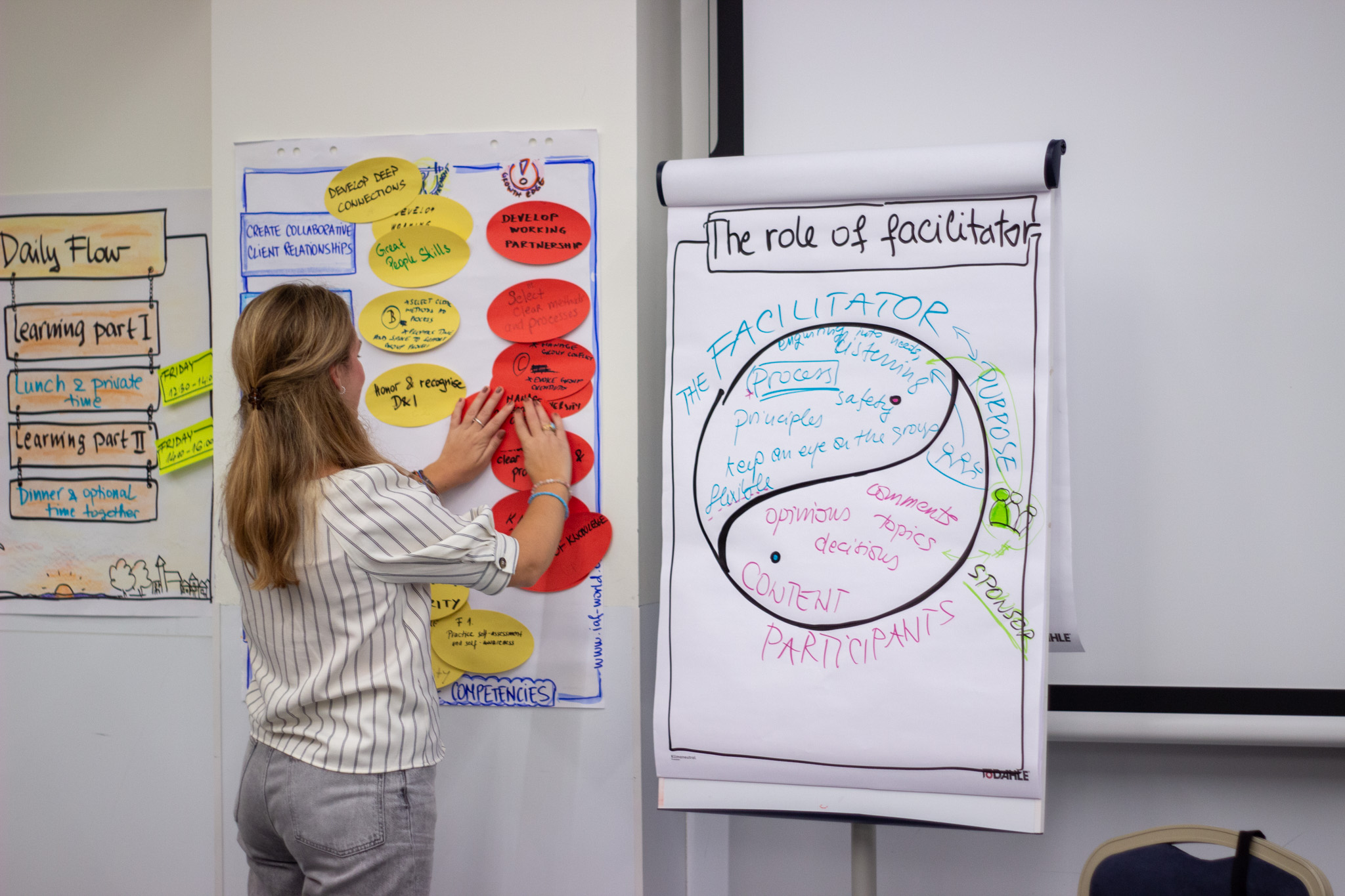
Facilitation isn’t about running fancy workshops or following rigid agendas. It’s about helping people think better together. Whether it’s a team meeting, project planning session, or a leadership retreat, facilitation creates the conditions where every voice adds value and diverse perspectives lead to wiser decisions.
A facilitator doesn’t lead the conversation — they enable it. They design spaces where clarity emerges, energy flows, and people leave not just aligned, but motivated.
Why It Matters
Organizations today thrive on collaboration. Yet many meetings still mirror the same old patterns: endless talk, unclear outcomes, and little commitment afterward. Skilled facilitation interrupts those patterns.
When facilitation is part of the culture:
– Discussions move from opinion-sharing to solution-finding.
– Decisions come with real buy-in, not silent resistance.
– Teams learn to listen — not just wait to speak.
The result? Meetings become catalysts for progress, not obstacles to it.
You don’t have to call yourself a “facilitator” to practice facilitation. The skill sits at the intersection of leadership, empathy, and structure. It’s about reading the room, guiding attention, and fostering ownership. Every leader, project manager, or coach can benefit from learning these competencies.
After all, when people think well together, they act well together.